

Switch your mortgage. Stop overpaying.

We review your current mortgage, compare the market and help you move to a better rate at no cost to you.
Not sure where to start? Book a free call


We can help if...
- Your fixed rate ends in the next 6–12 months.
- You haven’t reviewed your rate in years.
- You want to borrow extra for renovations.
- You want to reduce monthly payments.
- You are looking at consolidating debt.
We work with all major lenders in Ireland to secure the best mortgage rate for you.








How we work
Working with IMC is really simple, from a quick call to final approval, we’re there to guide you
Initial assessment
We’ll review your existing mortgage and documents
Formal Assessment
We’ll give you tailored advice based on the most up-to-date rates
Property Assessment
A valuation is completed on your property identifying the best rate based on this assessment
Switch complete
After the legal fees and breakage fees (if any) are paid off, your switch will be complete
Why people switch
We are Ireland’s largest and oldest mortgage broker over the last 36 years so we know a thing or two about mortgages. We’ll assess your existing mortgage and explore the best rates and deals on the market that would be ideal for you.
Lower monthly repayments
In the vast majority of cases where switching is recommended, a typical mortgage switcher in Ireland can save around €2,400 in the first year alone by moving to a more competitive rate.
Overpayment
Overpayment means paying more than your required monthly mortgage repayment, either regularly or in a lump sum to reduce your term or reduce the total interest you pay over the term.
Cashback offers that can offset legal fees
Cashback offers can give you a real financial boost when switching. This can be used to offset upfront costs, i.e. legal fees, valuation, small renovations, etc.
Funding improvements
A more competitive mortgage rate that results in lower monthly repayments can fund renovation projects you’ve put on the long finger, appliance upgrades or even general furnishing.
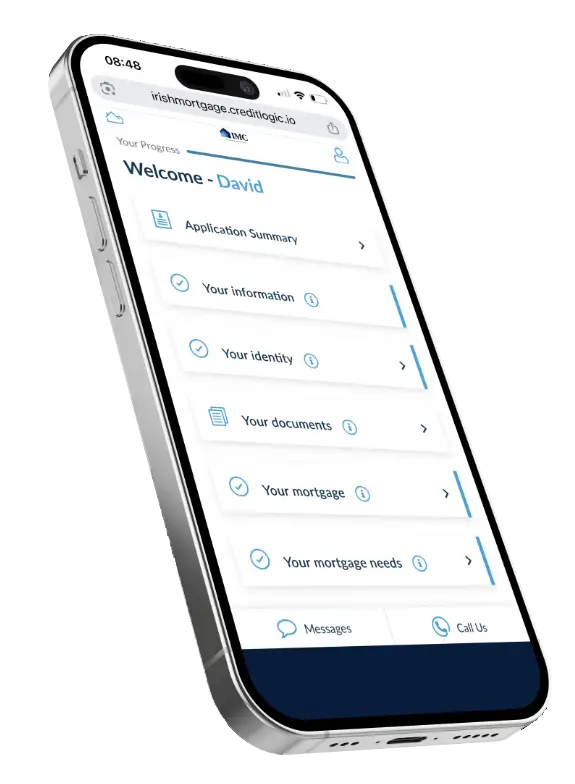
DIGITAL MORTGAGE PORTAL
Your mortgage at
your fingertips
A fully digital mortgage portal, with real people behind it.
Track your application in one place, in real time, while an expert IMC advisor:
- Guides you from first chat to keys
- Works to secure the best available rate for you
- Handles the communication with both lenders and your solicitor so you can have peace of mind
36+ years and counting
We have an excellent rating on Google & Trustindex and Access to all main lenders and best available rates.
Read some of the reviews we’ve received from satisfied homeowners nationwide.

Posted on Google
 Liam F16 September 2026
Trustindex verifies that the original source of the review is Google.
Great experience and very prompt would highly recommend.Posted on Trustindex
 Brian16 September 2026
Verified
Thorough and professional service Really impressed with their thoroughness and professionalism during my house purchase. They’ve been consistently available to provide helpful advice whenever needed, making the process much easier and less stressful. Highly recommended!Posted on Google Gerard C16 September 2026Hazel and Liam were outstanding to deal with.Posted on Google
 Mihai P16 September 2026We strongly recomand this company ,we work with Michelle senior Adviser ,she stay clouse to us all long run give us update evry step take in ,all rhe question ,conserns ,she was there ,also they have a solicitor and pack to recomand .5 ***** from the whole ball ! Good luck in the future ! We all thank you !Posted on Google
 Emily H16 September 2026I cannot reccomend them enough! Eoghan, Zoe and Rob were especially helpful every step of the way and were very easy to deal with. They made something very stressfull feel easy and I wouldn't hesiate to use them again!Posted on Google
 Adrianna D16 September 2026I had an amazing experience with IMC. Paddy Carolan made the whole process of buying our home smooth and stress-free. He was incredibly reassuring and always answered all of our questions promptly. His professionalism was outstanding, and I highly recommend IMC to anyone looking for a mortgage. I would also like to add that the closing team was absolutely amazing and very professional. They were always quick to respond and made the final stages of the process run smoothly. A special thank you to Zoë Noonan for all her help and support. It was truly a pleasure to have such fantastic brokers looking after us at IMC. We felt supported throughout the entire journey and couldn't be happier with the service we received. Thank you, Paddy, Zoë, and the whole IMC team for helping us get our new home!Posted on Google
 Sibi A15 September 2026⭐⭐⭐⭐⭐ Excellent service from Irish Mortgage Corporation. Gráinne and Ciarán were absolutely fantastic throughout the entire mortgage process. They were professional, responsive, and always willing to explain things clearly and keep us updated. Their support made what could have been a stressful process much easier. I genuinely appreciate the time and effort they put into helping us get everything over the line. Highly recommended Irish Mortgage Corporation, and especially Gráinne and Ciarán, for their outstanding service!Posted on Google
 Seán M15 September 2026I've used IMC for my last few mortgage switches and they've always been great to deal with. Very easy process and very quick response times. Highly recommend.Posted on Google
 Ariane E15 September 2026I had a wonderful experience with IMC. Ciara and her team were dedicated, acted with celerity, and explained every step of the way with plenty of detail. My purchase took over a year to complete (because it was being built) and they were patient and understanding. I would've found the mortgage selection and application process quite overwhelming without them, and I'm grateful I got to work with them. I'd recommend them to anyone.Posted on Google
 Tomislav S15 September 2026I can't recommend Irish Mortgage Corporation highly enough. From the first conversation, the whole process felt far less daunting than I expected. A special mention to Daniel Behan, an absolute master of his craft and thoroughly professional throughout. He guided me through my mortgage application step by step, explained every detail clearly, and was always quick to respond whenever I had a question. He knew exactly what was needed at each stage and made what could have been a very stressful process feel straightforward. If you're looking for a mortgage broker who genuinely knows their stuff and looks after you properly, ask for Daniel. Many thanks to him and the whole team.Posted on Google
 Joanne S14 September 2026Ciara and the team were excellent. Highly recommended them. Very professional from start to finish.Posted on Trustindex
 Jamie S14 September 2026Great Support Throughout Really helpful and professional from start to finish. They guided me through every step and made the whole process much easier. Would definitely recommend.Posted on Google
 Vitaliy N14 September 2026The entire process was quick, efficient, and well organised. Communication was excellent from start to finish, and any questions I had were answered promptly and clearly. The team was professional, supportive, and always willing to help, making what can often be a stressful process much easier to manage. I particularly appreciated how responsive and proactive they were in keeping me updated at every stage. Their guidance and expertise gave me confidence throughout the application, and I felt supported from the initial enquiry right through to receiving my loan offer.Posted on Google
 Cathal H14 September 2026Ciara genuinely couldn’t be a better person to have on your side. Househunting is so stressful in today’s world and having someone as organised, efficient, effective and friendly as Ciara from IMC is genuinely the best thing you can do to take some of that stress off your back. I’ve already recommended her as a broker to friends!Posted on Google
 Roisin O14 September 2026Fast efficient mortgage approval service. Thanks to Graham and Grainne for all their help and advice throughout the process. Highly recommend!Posted on Google
 Abi M14 September 2026Myself and my partner Callum cannot recommend Dan enough, he made this process so straight forward for ourselves, we’re absolutely delighted with the support and care. Thank you so muchPosted on Google
 Siobhan N13 September 2026
Trustindex verifies that the original source of the review is Google.
Lorraine was so helpful and kind. She kept us up to date about every step and happily answered any questions or queries we had at any time. I highly recommend Lorraine.Posted on Google Alvaro T13 September 2026We have had a fantastic experience with Irish Mortgage and I would highly recommend them to anyone looking for help with their mortgage. This is our second mortgage with them, and on both occasions the experience has been consistently excellent. They have been incredibly helpful, professional and easy to deal with throughout the whole process, with great communication and support from start to finish. It is so reassuring to know you are in good hands when going through something as important as a mortgage. We would absolutely recommend them and would not hesitate to use them again in the future.Posted on Google
 Евгений12 September 2026I am extremely satisfied with the service provided by Irish Mortgage Corporation. From the very beginning, the team was professional, helpful, and always available to answer my questions. They guided me through the entire mortgage process, explained everything clearly, and made what could have been a stressful experience much easier. I truly appreciate their dedication, expertise, and support. I would highly recommend Irish Mortgage Corporation to anyone looking for a reliable and professional mortgage broker. Thank you for your excellent work and support!Posted on Google
 Shane D12 September 2026Great service, nice people and quick responses with attention to detail. No problems at all. Highly recommended.Posted on Google
 John K11 September 2026Excellent and professional service from start to finishPosted on Google
 Callum F11 September 2026Dan helped us as first time buyers starting with little to no knowledge on mortgages. We’re very grateful for Dan helping us through the process! Thanks Dan!Posted on Google
 Ellen C10 September 2026Amazing from start to finish and Joey made the process seamless. AIP in a week!! Thank youPosted on Trustindex
 Aoife D10 September 2026Amazing staff - highly recommend! Can't fault the experience at all. The advisors are so helpful and check in with you regularly. The mortgage portal is so handy, you see everything you need to do. I want to say a huge thank you to Michelle Maloney, who did the amazing trojan work to get us to loan offer and to Stephen, Mel and Hazel who were involved along the way too. Thank you all very much.Load moreVerified by TrustindexTrustindex verified badge is the Universal Symbol of Trust. Only the greatest companies can get the verified badge who has a review score above 4.5, based on customer reviews over the past 12 months. Read more
Answers to common first time buyer questions?
You can talk to any of our mortgage advisors for advice for free and unbiased information or take a look at our faqs
What is switching?
Switching is when you move your existing mortgage from your current lender to a new lender (or sometimes a new product with the same lender) to get a better rate, deal, terms or features without changing home.
How much can I save if I switch my mortgage?
Savings depend on your balance, rate and remaining term, but Irish data suggests a typical switcher can save from around €2,400 a year on a modest rate improvement, and in some cases up to €7,500+ a year where the gap between old and new rates is larger.
“Is there a breakage cost if I switch from my existing lender?”
If you’re on a variable rate, there is usually no break fee, so you can switch at any time (subject to the usual costs). If you’re on a fixed rate, you may have to pay a breakage (early repayment) fee, which can be small or “hefty” depending on your lender, how long is left on the fix and where market rates are when you switch.
How much does it cost to switch my mortgage?
Typical out‑of‑pocket costs are mainly legal fees and a valuation, which together often come to roughly €1,500–€2,000 including VAT, though some lenders offer cashback that can cover or offset these costs. You should always weigh these once‑off costs against the annual saving on your new rate to see if switching makes financial sense over the period you expect to stay on that mortgage.
What is overpay in terms of mortgages?
Overpaying means paying more than your required monthly mortgage repayment (or making extra lump‑sum payments) so you clear the loan faster and pay less total interest over time. Many variable‑rate mortgages allow unlimited overpayments, while fixed‑rate loans often allow only limited penalty‑free overpayments, so it’s important to check your own lender’s rules before you start.
Insights, tips and guidance
Costs, cashback, break fees and all other mortgage switching jargon explained.
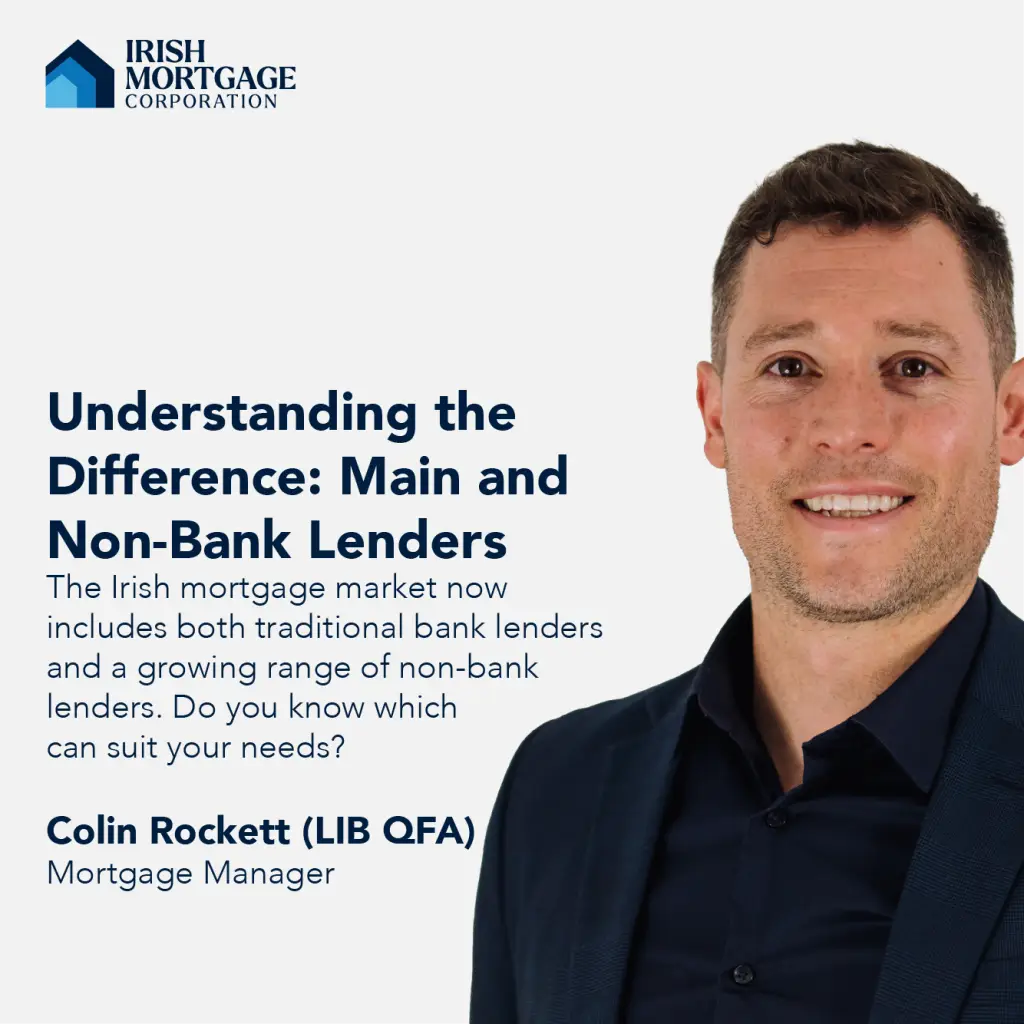



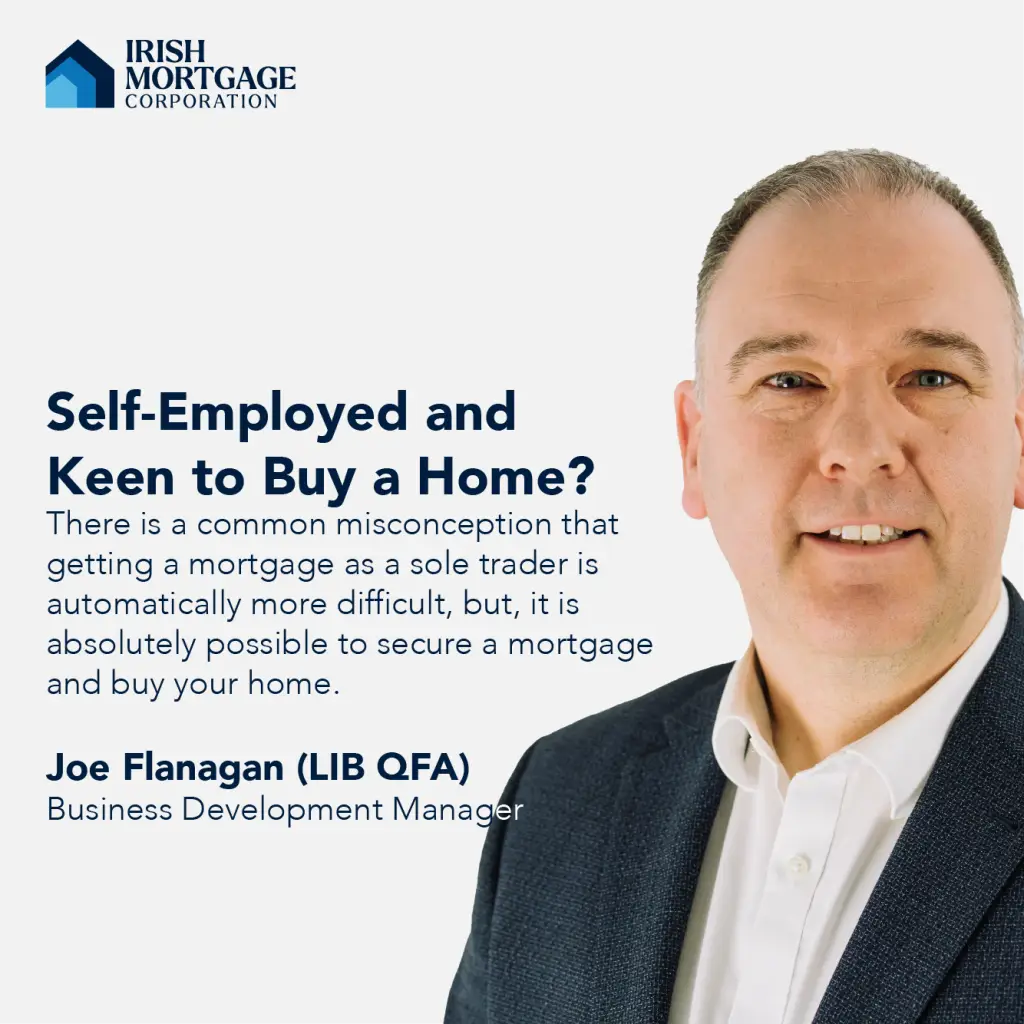




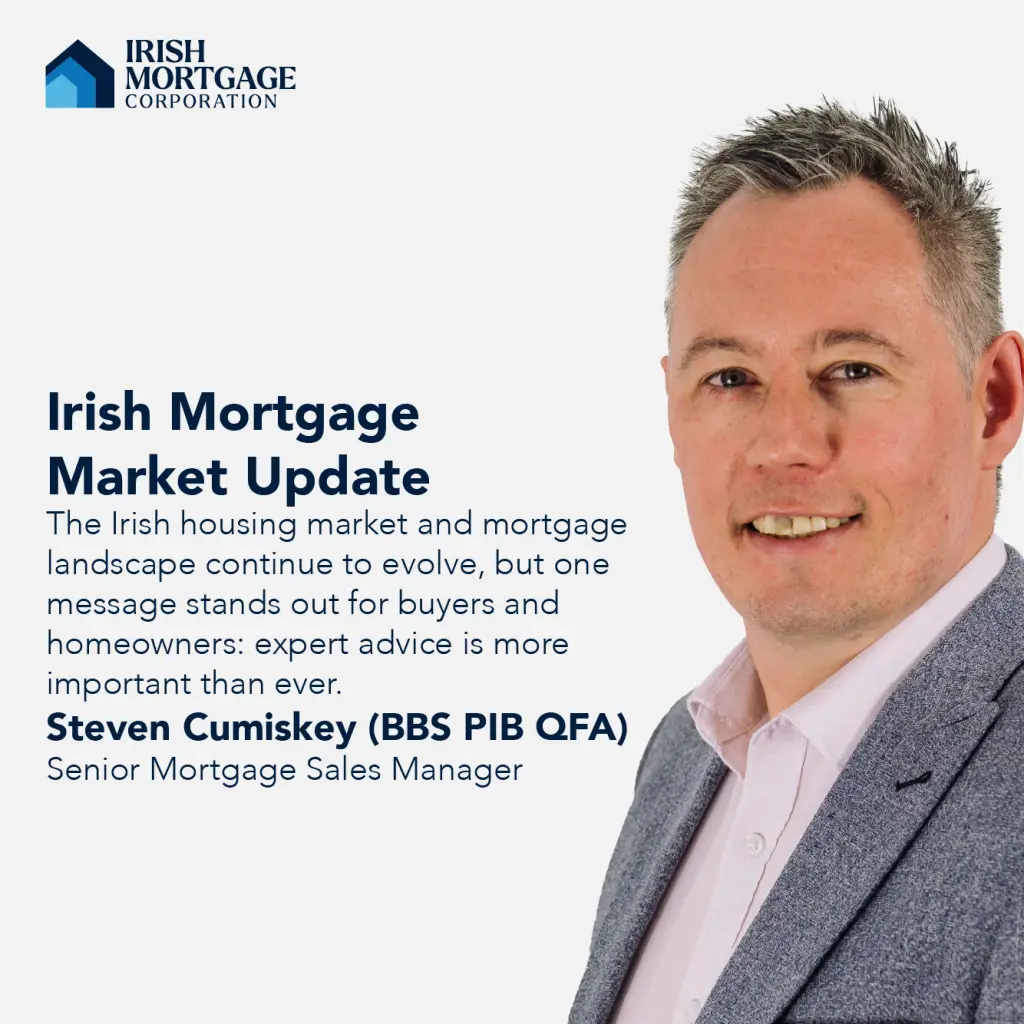
If you haven’t reviewed your mortgage in years, you’re probably overpaying
If you would like to understand your options and see whether switching is worth it for you, speak with us today and we will be glad to guide you through the process.
Debt consolidation warning: This new loan may take longer to pay off than your previous loans. This means you may pay more than if you paid over a shorter term.
Incentives offered warning: You should consider the total cost of a mortgage loan, including any potential additional cost of an incentive offered with it.
You should consider the total cost of a mortgage loan.
For more information on switching please find attached the link to Competition Consumer Protection Commission: https://www.ccpc.ie/consumers/money/mortgages/switching-lenders-or-mortgage/
Be in the know
Subscribe to our newsletter to get
updates on the mortgage market
as and when they happen
By clicking subscribe you agree to receive emails from Irish Mortgage Company and accept the terms of use and privacy policy
WARNINGS
If you do not keep up your repayments, you may lose your home.
If you do not meet the repayments on your credit agreement, your account will go into arrears. This may affect your credit rating, which may limit your ability to access credit in the future.
The payment rates on this housing loan may be adjusted by the Lender from time to time.
Your interest rate may increase and the amount of your mortgage repayments may increase as a result.
You may have to pay charges if you pay off a fixed rate loan early.
The entire amount that you have borrowed will still be outstanding at the end of the interest only period.
You should consider the total cost of a mortgage loan, including any potential additional cost of an incentive offered with it.